In today’s fast-moving digital world, businesses must respond quickly to customer questions and problems. Customers expect fast answers at any time, and slow support leads to frustration, lost sales, and damaged reputation. To stay competitive, companies are increasingly using AI for customer service to improve how they handle customer interactions and change the way support works.
AI agents are transforming customer service by automating repetitive tasks, improving response times, and elevating the overall support experience. In this blog, we’ll explore what these AI agents are, how they work, their real-world benefits, and why they are becoming essential tools for modern support teams.
What Are AI Agents for Customer Service?
AI agents are software systems that use artificial intelligence to understand, manage, and resolve customer interactions without needing human intervention. They do much more than traditional tools, they interpret customer messages, decide what actions to take, and interact with backend systems to complete tasks.
Unlike a basic script or rule-based bot, an AI customer service chatbot uses techniques like natural language processing (NLP) and machine learning (ML) to understand what a customer wants and then take action.
For example, while a traditional support bot might tell a customer how to reset a password, an AI agent might reset the password automatically and confirm the change with the customer. This capability brings support experiences closer to human-like service.
How AI Agents Work
AI agents for customer service rely on a blend of technologies:
Natural Language Processing (NLP)
This allows the agent to understand human language, including context, sentiment, and intent. It detects what a customer wants and responds appropriately, not just with canned replies.
Machine Learning
AI agents learn over time. As they process more customer interactions, they improve in accuracy and decision-making. This helps them handle a wider variety of requests more effectively.
System Integration
Unlike basic bots, AI agents connect with internal business systems, like CRM platforms, order databases, and ticketing tools, so they can take real action, not just answer questions.
Autonomous Decision-Making
Modern AI agents can decide what action is required, like issuing a refund, updating account information, or scheduling a service, and execute it without waiting for a human agent.
Key Benefits of AI Agents in Customer Service
Adopting AI agents isn’t just a technological upgrade, it fundamentally changes how support teams operate. Here are the core advantages:
1. Faster Response Times
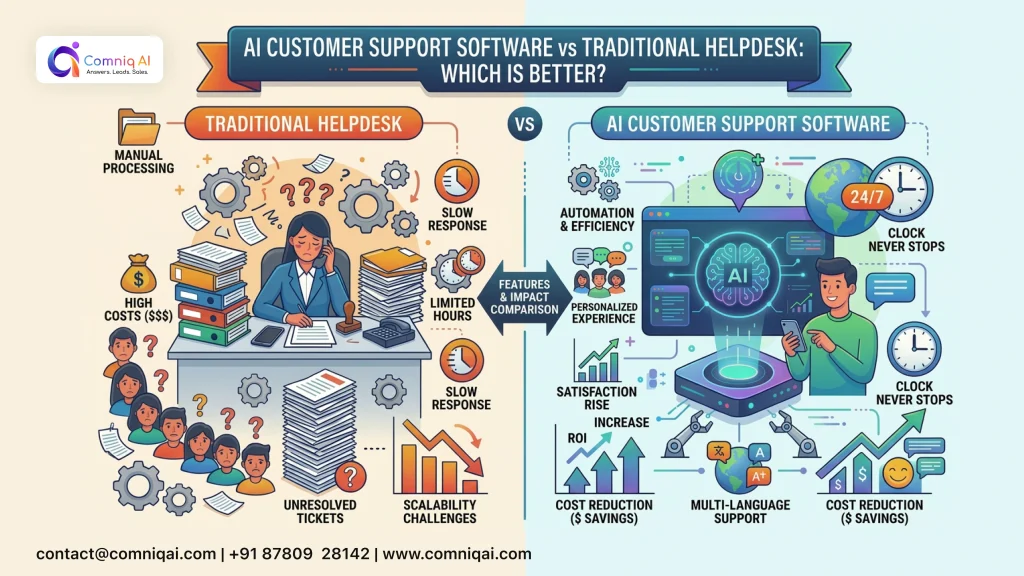
Customers don’t want to wait. AI agents reply instantly, reducing wait times and improving customer satisfaction, a major advantage over traditional support channels where response times can lag.
2. 24/7 Availability
AI systems don’t sleep. They provide nonstop service, ensuring help is available at all hours, including nights and weekends. This enhances the customer experience and builds trust.
3. Operational Efficiency
AI agents handle routine queries automatically, allowing human staff to focus on complex problems that require judgment and empathy. This shift boosts overall support productivity.
4. Personalization at Scale
Because AI agents can analyze customer history and behavior, they can tailor responses to individual needs, offering personalized support that feels more useful and relevant.
5. Data-Driven Insights
AI systems collect data from support interactions to reveal trends, common issues, and customer sentiments. These insights help businesses improve products, refine processes, and make better decisions.
Use Cases of AI Agents in Customer Service
Businesses are deploying AI agents in many ways, including:
Automated Inquiry Handling
AI agents manage high volumes of routine questions automatically, like order status, account details, returns, and FAQs, reducing the load on human staff.
Omnichannel Support
AI agents work across web chat, email, messaging apps, and even voice systems, ensuring customers get consistent support no matter how they choose to reach out.
Ticket Routing and Escalation
They analyze requests, prioritize them based on urgency, and route complex issues to the right human agent, with context included, for faster resolution.
Self-Service Solutions
AI supports customers who prefer to help themselves by providing guides, troubleshooting steps, and automated processes without human involvement.
Sentiment Detection
By analyzing tone and sentiment, AI agents can detect frustration or urgency, which helps prioritize sensitive cases and improve customer experience.
AI Agents vs Traditional Chatbots
While many people think all automated support is the same, there’s an important difference between basic bots and intelligent AI agents:
- Traditional bots follow rules and can’t act beyond predefined replies.
- AI agents understand context, integrate with systems, take actions, and learn over time.
This means AI agents can deliver end-to-end support, not just service conversations. For more details on how basic chatbots compare with advanced systems, check out our internal link on AI chatbot vs ChatGPT, which explains different use cases and strengths of chatbot technologies.
Why Businesses Are Investing in AI for Customer Service
Companies of all sizes are turning to AI for customer service because it helps them:
- Scale support without adding headcount
- Improve productivity and response quality
- Free human agents to focus on high-value tasks
- Deliver faster resolutions that delight customers
This shift is also helping many brands reduce support costs while maintaining service standards, a topic explored deeper in our internal guide on How AI Chatbots Help Companies Cut Support Costs.
Challenges and Considerations
Despite their benefits, AI agents aren’t a magic solution. Businesses need to consider:
Integration complexity – Agents must connect with the right systems to be effective
Training data quality – AI accuracy depends on good data
Human-AI balance – Systems should escalate complex matters, not replace human judgment
While AI improves service efficiency, thoughtful implementation and continuous monitoring are keys to success.
The Future of AI in Customer Service
AI agents are evolving rapidly. In the future, we’ll see:
- Smarter context-aware systems that remember long customer histories
- Voice-enabled AI assistants that interact naturally over calls
- Predictive support that anticipates customer needs before they ask
The future of customer service is not just automated, it’s proactive, personalized, and always improving.
Conclusion
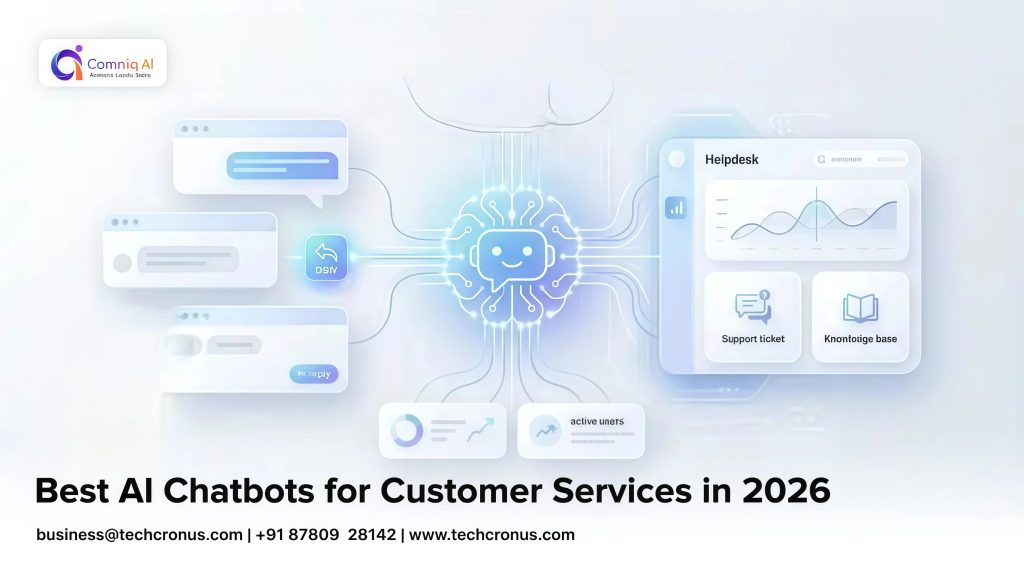
AI agents are reshaping how businesses approach customer service. With faster responses, round-the-clock availability, and smarter automation, they are a powerful form of AI for customer service that supports both customers and human teams alike.
By investing in an ai chatbot for customer service or an advanced AI agent platform, companies can boost satisfaction, improve operational efficiency, and prepare support teams for the future of digital interaction.
Embracing these technologies today gives businesses a competitive edge tomorrow, and the results speak for themselves.