As businesses race to improve online conversions, two technologies dominate the conversation: AI chatbots and AI agents. Both promise better engagement, faster responses, and automated interactions. But when the real goal is converting visitors into qualified leads, the difference between the two becomes very clear.
In this article, we’ll break down how AI chatbots and AI agents work, how they impact lead conversion, and which option delivers better results for modern businesses.
Understanding AI Chatbots
An AI chatbot is designed primarily to respond. It answers questions, provides information, and guides users through predefined flows. Modern chatbots use natural language processing, making conversations feel more human than earlier rule-based bots.
Chatbots are especially useful for handling common customer queries, which is why many companies adopt them to solve Customer Support Challenges such as high ticket volume and slow response times. They can also collect basic lead information like email addresses or phone numbers.
However, chatbots usually rely on user initiation. If a visitor doesn’t ask the right question or leaves mid-conversation, the opportunity is lost.
What Makes AI Agents Different?
AI agents go beyond conversation. Instead of waiting for instructions, they are built to act autonomously based on goals and context. An AI agent can detect intent, decide the next best action, and complete tasks across systems.
For example, rather than simply answering pricing questions, an AI agent can:
- Identify high-intent visitors
- Ask adaptive qualification questions
- Capture lead details automatically
- Route qualified leads to sales
- Trigger follow-ups without manual effort
This ability to operate end-to-end is what separates agents from chatbots and explains why businesses focusing on growth increasingly move toward AI chatbots for customer service that behave more like agents than static bots.
Engagement: Reactive vs Proactive
Chatbots are reactive by nature. They wait for users to initiate a conversation. This works well for support but is limiting for lead generation.
AI agents, on the other hand, can proactively engage visitors based on behavior. For instance, if someone spends time on a pricing or demo page, an AI agent can initiate a contextual conversation at the right moment. This proactive engagement is a key reason companies adopting agent-based automation report higher conversion rates.
Lead Qualification Quality
One of the biggest gaps between chatbots and AI agents lies in lead qualification.
A chatbot might ask:
“Would you like to leave your email?”
An AI agent asks:
“What problem are you trying to solve, how large is your team, and when are you planning to implement a solution?”
The agent adapts questions based on responses, scores the lead, and decides whether to book a demo, trigger a follow-up, or route the lead to sales. This depth of qualification directly improves sales efficiency and pipeline quality.
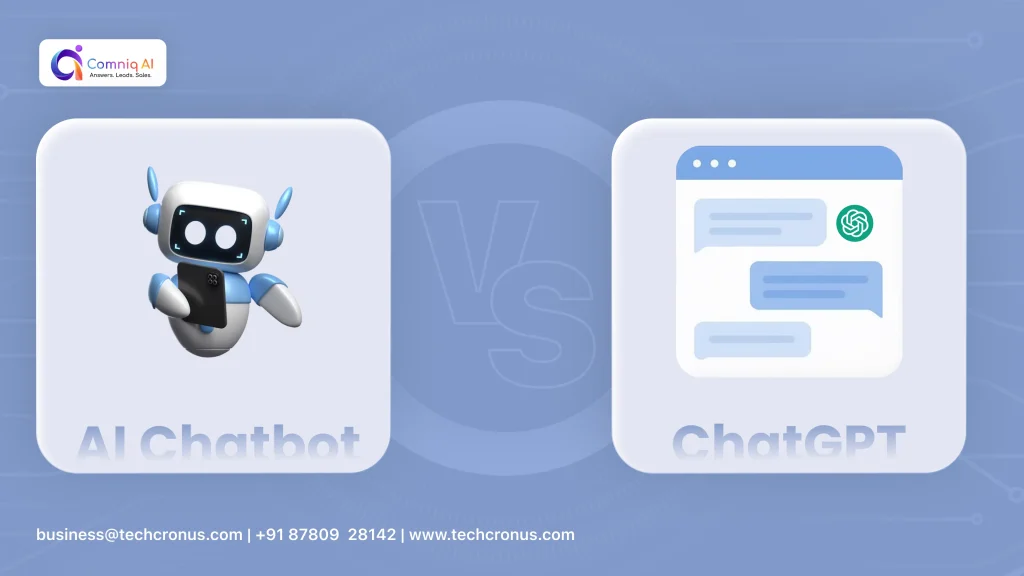
That’s why many teams comparing AI chatbot vs ChatGPT. Eventually realize that conversational ability alone isn’t enough, actionability matters.
Conversion Impact: What the Data Shows
Industry studies consistently show that basic chatbots help with engagement but plateau when it comes to conversions. They improve response times and reduce drop-offs, but they rarely manage the entire funnel.
AI agents, however, combine conversation with workflow automation. Businesses using agent-based systems often see:
- Higher lead capture rates
- Better qualified inbound leads
- Faster time-to-conversion
- Reduced manual handoffs
This is why advanced platforms are no longer positioned as simple bots, but as AI powered chatbot platforms designed for revenue impact, not just conversations.
Where Chatbots Still Make Sense
Chatbots are not obsolete. They are excellent for:
- Handling FAQs
- Providing instant answers
- Supporting customers 24/7
- Reducing first-response time
In fact, many organizations start with chatbots to solve immediate support needs and later upgrade when growth demands more automation. The key is recognizing when a chatbot becomes a bottleneck instead of a growth driver.
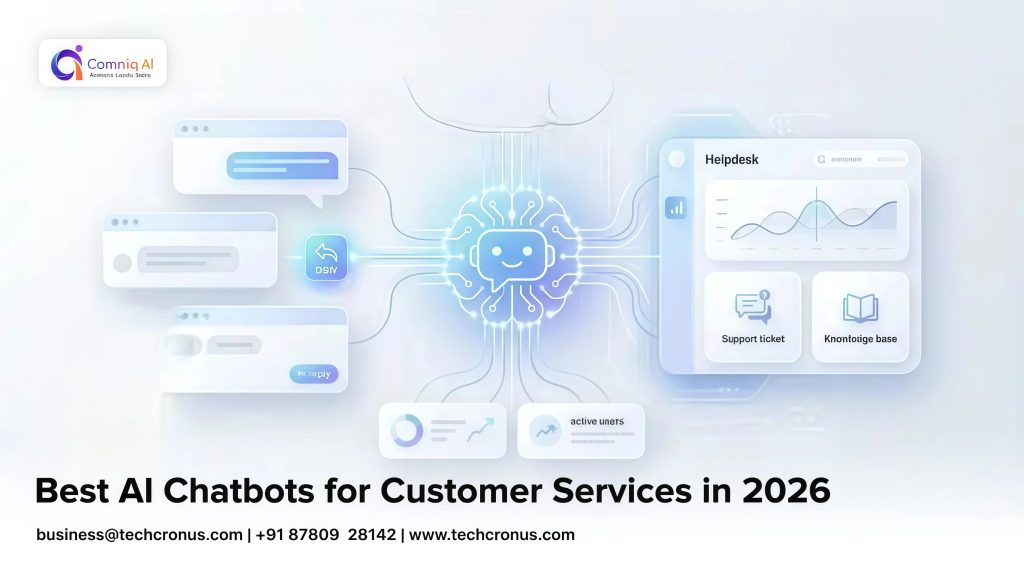
That transition often happens when teams explore Best AI Chatbots for Customer Services and realize that “best” now means more than just replying, it means converting.
Why AI Agents Convert More Leads
AI agents convert more leads because they don’t stop at conversation. They:
- Understand intent
- Take initiative
- Execute actions
- Learn from outcomes
They bridge the gap between marketing, sales, and support by acting as a digital team member instead of a scripted assistant. This makes them especially valuable for businesses focused on scalable growth.
Why ComniqAI Fits?
ComniqAI is designed around this agent-first approach. Instead of functioning as a simple chat interface, it enables businesses to build AI agents that capture, qualify, and route leads automatically, even when teams are offline.
By combining conversational intelligence with automation, ComniqAI helps companies move beyond basic chat interactions and turn every website visitor into a potential opportunity. It fits naturally for teams that have already solved basic support automation and now want measurable improvements in lead conversion and revenue efficiency.
Final Verdict: Which Converts More Leads?
If your primary goal is answering questions and reducing support load, a chatbot is sufficient.
But if your goal is converting visitors into qualified leads and customers, AI agents are clearly more effective.
Chatbots talk.
AI agents act.
And in a competitive digital landscape, action is what turns conversations into conversions. Businesses serious about growth are increasingly choosing agent-driven platforms like ComniqAI, not because chatbots are bad, but because AI agents are built to close the gap between interest and revenue.