Discover the Best AI Chatbots for Customer Services in 2026. Learn how AI chatbots improve response times, cut support costs, deliver 24/7 assistance, and help businesses choose the right tools for smarter, more efficient customer support.
Introduction
Customer expectations have changed. People want quick answers, clear support, and help that doesn’t keep them waiting. To meet these expectations, many businesses now rely on AI chatbots for customer service. These tools help respond to customer questions instantly, reduce the workload on support teams, and improve overall customer satisfaction. By handling common and repetitive queries, AI chatbots allow human agents to spend more time solving complex issues. In this guide, we’ll walk through what AI chatbots are, why businesses use them, how they work, and which tools are worth considering in 2026.
What Are AI Chatbots for Customer Service?
AI chatbots are software programs that use artificial intelligence to communicate with customers in real time. They can answer questions, suggest solutions, handle routine support tasks, and even escalate issues to human agents when needed.
What makes them so powerful is their use of machine learning, natural language processing (NLP), and conversational AI, technologies that help bots understand user intent and respond in human-like ways. These technologies allow chatbots to handle a wide range of interactions, from simple FAQs to more nuanced customer queries.
For example, some chatbots now understand sentiment (positive, neutral, or negative customer emotions) and adjust responses accordingly. They can also tap into help-desk content or CRM data to provide tailored answers, improving resolution quality and speed.
Benefits of AI Chatbots for Customer Service
Using AI chatbots for customer service isn’t just a trend, it’s a business strategy backed by data and proven results. Here’s why companies are rapidly adopting them:
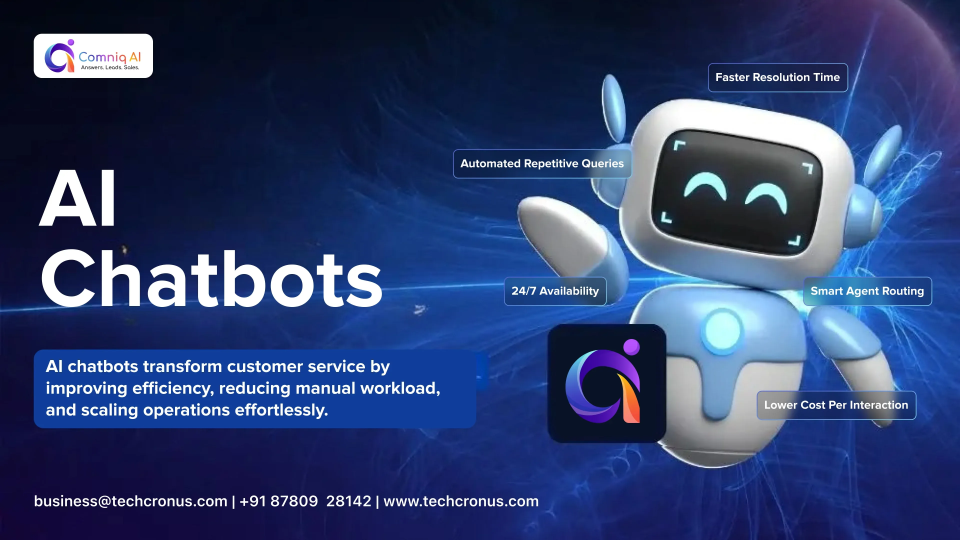
24/7 Availability
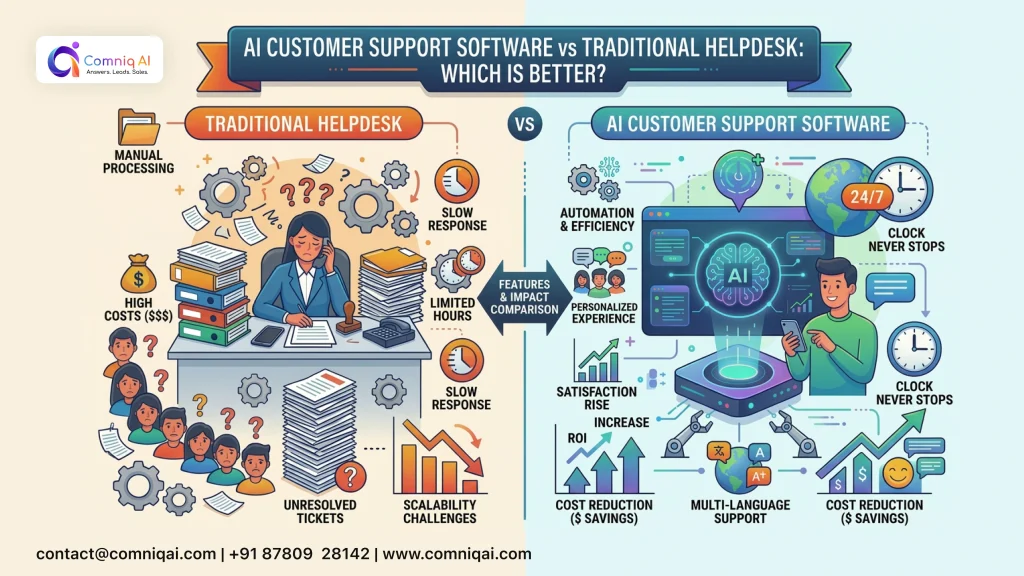
Unlike human agents, AI chatbots are never offline. They can handle customer inquiries at any time, even after business hours, ensuring your customers always get help when they need it.
Instant Responses & Better Resolution Times
Studies show that AI chatbots can significantly reduce response times, sometimes by up to 50%, which positively impacts customer satisfaction.
Cost Savings & Operational Efficiency
AI chatbots automate repetitive tasks like basic questions, ticket creation, and status updates. This can cut customer service costs by up to 30%, according to industry reports.
Personalized Support
When integrated with CRM systems, chatbots provide personalized recommendations based on customer history and preferences, strengthening engagement and retention.
Data Insights & Analytics
AI chatbots collect conversation data that you can use to identify common issues, improve FAQs, and refine support content, helping teams proactively solve problems.
How AI Chatbots Work (Simple Breakdown)
At the heart of every AI chatbot is natural language processing (NLP). This technology helps the bot understand what the customer is asking by:
- Interpreting intent: Understanding the goal behind customer messages.
- Matching to relevant answers: Pulling answers from databases or knowledge bases.
- Responding in human-like language: Using conversational structures to reply clearly.
- Escalating when necessary: If the question is too complex, escalating to a human agent.
Some advanced systems use conversational AI to learn over time. This means the more interactions they handle, the better they become at understanding unique customer requests.
Top AI Chatbots for Customer Service in 2025
Here’s a curated list of the best AI chatbots for customer service, each with a brief overview of what makes it stand out:
Comniq AI
Best for: Smart, conversation-driven customer support with business context
Comniq AI is designed to handle real customer conversations, not just scripted replies. It helps businesses automate common support queries, understand customer intent, and route conversations intelligently when human help is needed. Comniq AI focuses on improving response quality while reducing support workload, making it a strong option for teams that want efficient yet human-like customer interactions.
Zendesk AI
Best for: Large enterprises with complex support operations
Zendesk AI creates autonomous support agents that can sort incoming tickets, suggest relevant help-center articles, and escalate complex issues to human agents. It works smoothly across email, social media, and live chat, making it a solid choice for high-volume support teams.
Intercom’s Fin AI
Best for: SaaS companies and mid-sized teams
Intercom’s Fin AI uses advanced language models to deliver clear, conversational responses. It’s well suited for handling product questions, routing conversations, and automating workflows, while also offering strong reporting and analytics.
Freshdesk / Freshchat
Best for: Small to medium-sized businesses
Powered by Freddy AI, Freshchat combines chatbot conversations with ticketing. It helps teams respond faster, guide customers through common issues, and even support lead generation, all from one platform.
Ada
Best for: Quick setup and no-code customization
Ada is built for teams that want to launch a chatbot quickly without technical effort. Non-technical users can create advanced conversation flows, automate FAQs, and update responses easily as customer needs change.
ProProfs Chat
Best for: Budget-friendly customer support automation
ProProfs Chat is easy to set up and focuses on basic customer service automation. It integrates with CRM tools and works well for handling FAQs, simple support questions, and live chat handoffs.
Netomi
Best for: Predictive and proactive customer support
Netomi uses advanced natural language processing (NLP) to understand customer intent and predict future needs. It’s useful for companies looking to move from reactive to proactive customer support.
Tidio
Best for: E-commerce businesses
Tidio’s Lyro AI chatbot helps online stores answer customer questions, track orders, and assist with cart recovery. It’s especially popular with small and mid-sized e-commerce brands looking to improve response times.
Kommunicate
Best for: Omnichannel support, including WhatsApp
Kommunicate supports multiple messaging channels and offers ready-made templates for fast deployment. It’s often praised by small businesses for its flexibility and ease of use across platforms.
How to Choose the Right AI Chatbot
Picking a chatbot isn’t about the “best overall” tool, it’s about what fits your business needs.
Consider These Questions:
- Do you need 24/7 support?
- Are multilingual interactions important?
- Will it integrate with your CRM and help desk?
- Do you want a no-code builder or deep customization?
- Is analytics and learning capability useful for your team?
Answering these helps narrow down which AI chatbot will actually improve your customer service.
Best Practices When Deploying AI Chatbots
Once you pick a solution, follow these tips:
Train With Your Own Data
Integrate your FAQs and historical support tickets so the bot learns context-specific answers.
Monitor Performance
Use analytics to track:
- Response times
- Deflection rates (queries handled by bot)
- Escalation rates
- Customer satisfaction scores
Blend Bots With Human Support
Set clear handoff rules so complex or sensitive queries go to a human, this preserves trust and empathy.
Conclusion
AI chatbots for customer service have transformed the way businesses support customers. They provide instant help, cost savings, and improved customer experience, all while enabling support teams to focus on higher-value work. With the right tool and implementation strategy, companies can build smarter, more responsive service channels that delight customers and drive operational excellence.