Learn how Chatbots Help Companies Cut Costs by automating repetitive support tasks, reducing response times, and scaling customer service efficiently. Discover how AI chatbots lower support expenses while maintaining high-quality customer experiences.
Introduction
Customer support is essential for business growth, but it is also one of the most expensive operations to manage. Hiring agents, training teams, handling peak volumes, and maintaining service quality all require a significant investment. As customer expectations for instant responses continue to rise, many companies struggle to scale support without increasing costs.
This is where AI-powered chatbots come in. Today, chatbots in customer service are helping businesses automate routine interactions, improve response times, and significantly reduce customer service costs, without compromising customer experience.
In this blog, we’ll explore how AI chatbots achieve this, why businesses are adopting them at scale, and how they fit into modern customer support strategies.
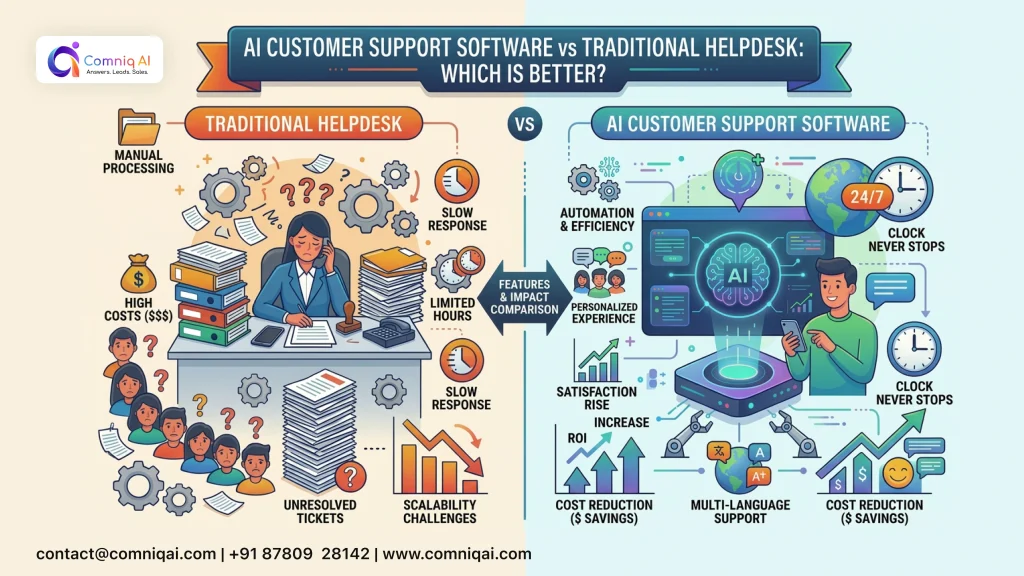
Why Traditional Customer Support Is Costly
Traditional customer support models depend heavily on human agents. While human interaction is critical for complex or emotional issues, most customer queries are repetitive. Common questions include order tracking, account access, pricing details, refunds, and basic troubleshooting.
Each of these interactions costs time and money. As businesses grow, support ticket volume increases faster than revenue, creating pressure on budgets. This leads to common Customer Support Challenges such as long wait times, agent burnout, inconsistent service quality, and rising operational expenses.
AI chatbots address these issues by automating what can be automated and doing it efficiently.
1. Automating High-Volume, Repetitive Queries
One of the biggest advantages of chatbots in customer service is their ability to handle repetitive questions instantly. These queries often make up the majority of incoming support requests.
Instead of assigning agents to answer the same questions repeatedly, AI chatbots provide immediate responses using predefined flows, AI models, or knowledge base integrations. This automation alone can reduce ticket volume by a large percentage.
When fewer tickets reach human agents, companies naturally reduce customer service costs by lowering staffing needs, overtime expenses, and training requirements.
2. Lower Cost Per Interaction
Human-led customer support has a fixed cost per interaction that includes salaries, infrastructure, and management overhead. AI chatbots, on the other hand, can handle thousands of conversations simultaneously at a fraction of the cost.
Once deployed, chatbots do not require additional resources to scale. Whether they handle 100 or 10,000 conversations, the operational cost remains nearly the same. This makes chatbots as a service an extremely cost-efficient solution for growing businesses.
Over time, this lower cost per interaction leads to substantial savings, especially for companies with high customer engagement volumes.
3. 24/7 Support Without Extra Staffing
Providing round-the-clock customer support is expensive when relying only on human agents. Night shifts, weekend coverage, and holiday support often require additional compensation or outsourced teams.
AI chatbots solve this problem by offering 24/7 availability without increasing payroll. Customers receive instant answers at any time, regardless of time zones or business hours.
This constant availability not only helps reduce customer service costs but also improves customer satisfaction by eliminating delays and unanswered queries.
4. Faster Resolution and Shorter Handling Time
Speed matters in customer support. Long response times frustrate customers and increase the total time spent on each issue. AI chatbots respond instantly, reducing wait times to near zero for common questions.
By resolving simple issues immediately, chatbots reduce the average handling time for the entire support operation. When issues are escalated to human agents, they already include context, conversation history, and customer details, allowing agents to resolve problems faster.
This efficiency directly impacts operational costs and helps teams do more with fewer resources.
5. Smarter Agent Utilization
AI chatbots are not designed to replace human agents entirely. Instead, they act as intelligent filters that route only relevant, complex cases to humans.
This hybrid approach ensures that skilled agents spend their time on high-value conversations that require empathy, judgment, or advanced problem-solving. As a result, agent productivity increases, and companies avoid overstaffing.
By using AI chatbots for customer service alongside human teams, businesses maintain service quality while keeping expenses under control.
6. Easy Scalability During Peak Demand
Customer support demand is rarely consistent. Seasonal sales, product launches, outages, or marketing campaigns can cause sudden spikes in customer inquiries.
Scaling a human support team quickly is expensive and inefficient. Hiring temporary agents often leads to training challenges and inconsistent service quality.
AI chatbots can instantly scale to handle increased demand without additional cost or preparation. This flexibility allows businesses to handle peak loads smoothly and reduce customer service costs during high-traffic periods.
7. Continuous Learning and Improvement
Modern AI chatbots improve over time. They learn from customer interactions, agent feedback, and conversation outcomes. This means responses become more accurate, flows get optimized, and resolution rates increase.
As chatbot performance improves, fewer conversations need escalation, further reducing reliance on human agents. This ongoing optimization makes chatbots as a service a long-term cost-saving investment rather than a one-time solution.
8. Improved Customer Experience Without Extra Spending
There’s a common misconception that reducing support costs means lowering service quality. In reality, AI chatbots often improve customer experience.
Customers get instant responses, consistent answers, and faster resolutions. When needed, handoffs to human agents are smoother and more informed.
This balance between automation and human support helps businesses maintain strong customer relationships while still addressing budget constraints.
Chatbots vs Traditional AI Tools
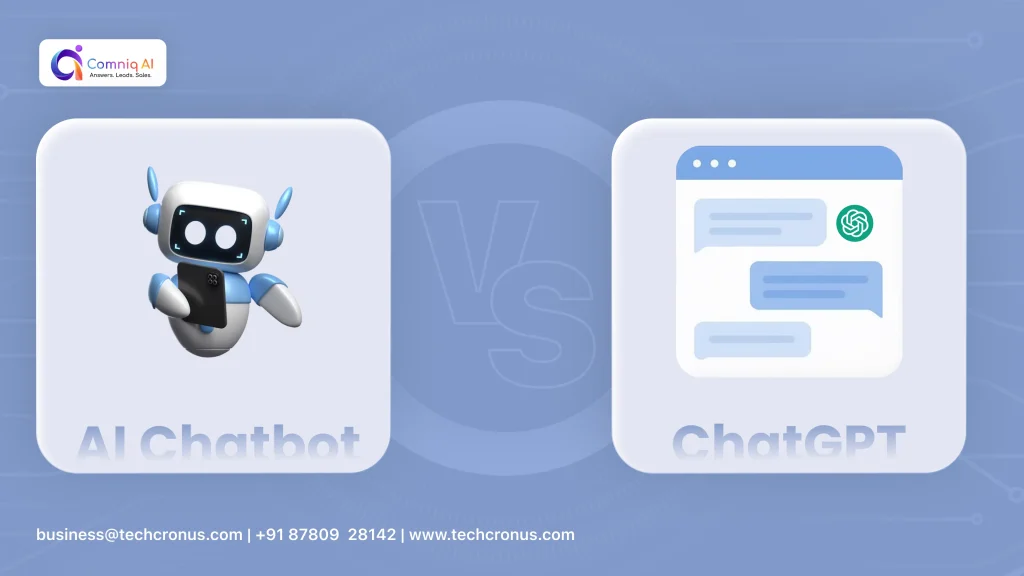
It’s important to distinguish between different AI tools. Many people compare AI chatbot vs ChatGPT, but the two serve different purposes.
Customer service chatbots are designed for structured, goal-oriented interactions such as answering FAQs, handling transactions, and resolving issues. They integrate with backend systems and support workflows.
This specialization makes AI chatbots far more effective for operational cost reduction than general-purpose AI tools.
Industries Benefiting the Most
While almost every industry can benefit, AI chatbots are especially impactful in:
- E-commerce and retail
- Banking and financial services
- Telecom and utilities
- SaaS and technology companies
- Healthcare and insurance
In these sectors, customer inquiries are frequent, predictable, and time-sensitive, making them ideal for chatbot automation.
Final Thoughts
Customer support doesn’t have to be a cost center that limits growth. With the right strategy, businesses can deliver excellent service while staying lean.
By adopting chatbots in customer service, companies can automate routine tasks, improve efficiency, and reduce customer service costs without sacrificing customer experience. Whether through automation, scalability, or smarter agent utilization, AI chatbots offer a practical and proven solution for modern support teams.
As customer expectations continue to rise, businesses that invest in chatbots as a service today will be better positioned to scale sustainably tomorrow.